creating in the middleof things

I often need to see things to make sense of them.

I write things down, draw diagrams, move things around. Somehow, seeing something outside my head gives me another way of thinking about it.

My art often begins the same way.

I make a mark. Something catches my attention. I respond. Something unexpected happens.

And that's often where it gets interesting.

Over time, that led me to wonder:

What if making something wasn't used in the middle of a coaching conversation to explore what we already knew — but as a completely different place to begin?

It started with a client that barely spoke…

Find Your Pattern didn’t begin with an idea for a new methodology.
It began with a coaching session that made me feel completely inadequate.

I was working towards my first 100 hours as a systemic coach when I began working with a client who shared very little.

I had told her she only needed to share what she felt comfortable sharing. She took me at my word.

I realised just how dependent I was on my client being willing — and able — to tell me her story.

That experience stayed with me

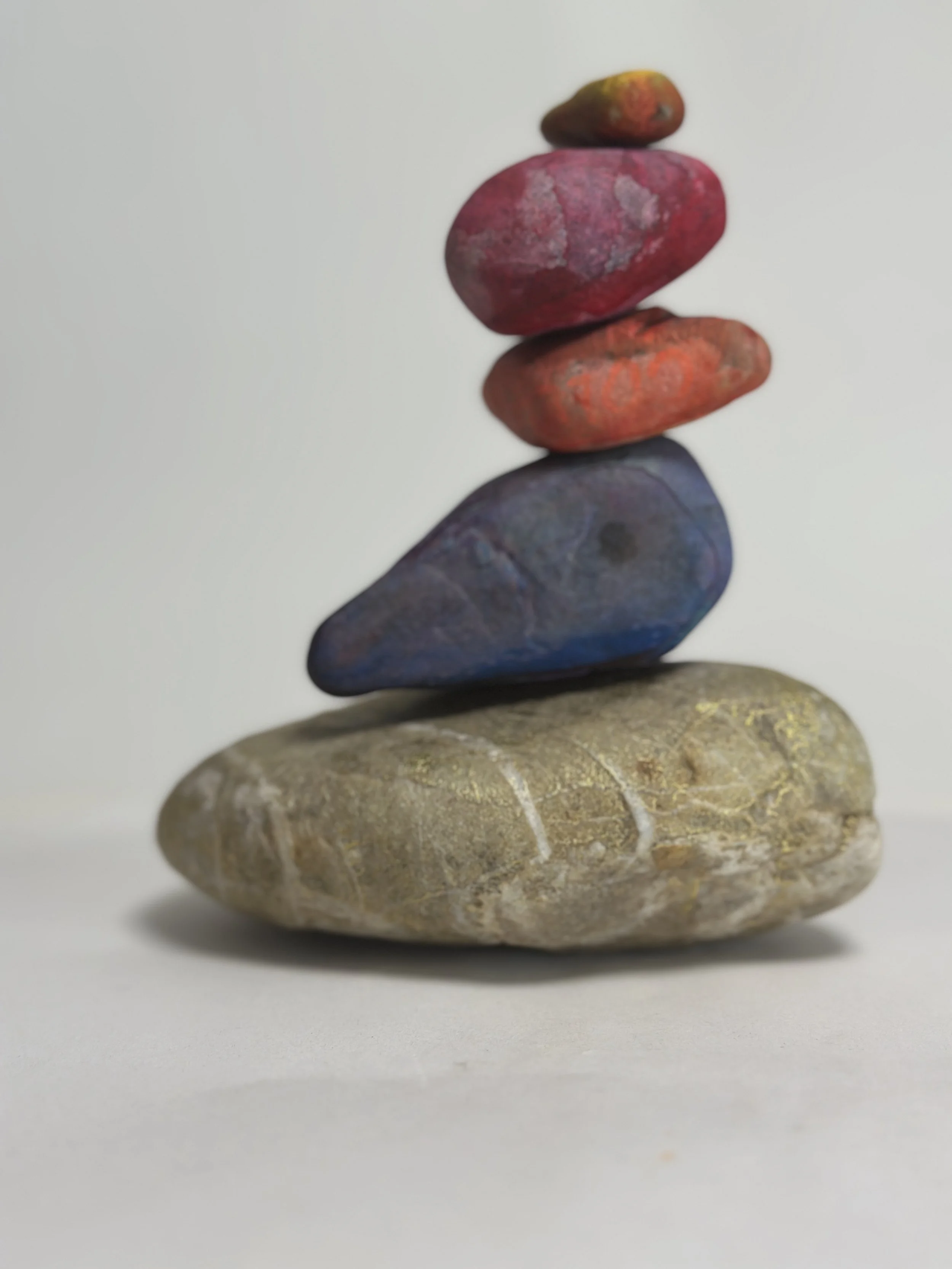
I began looking for ways to give people something outside themselves to respond to, arrange and explore. I created Mind Mapping cards and later incorporated other creative approaches into my coaching, including stone constellations and role play.

They opened different possibilities, but I eventually noticed something.

However creative the tool, we were still beginning with words.

The client told the story first and then we explored it.

Stories can become very familiar. We can repeat them, explain them convincingly and still find ourselves going around in circles

I started wondering whether there might be another place to begin.

I already knew how to begin without knowing…

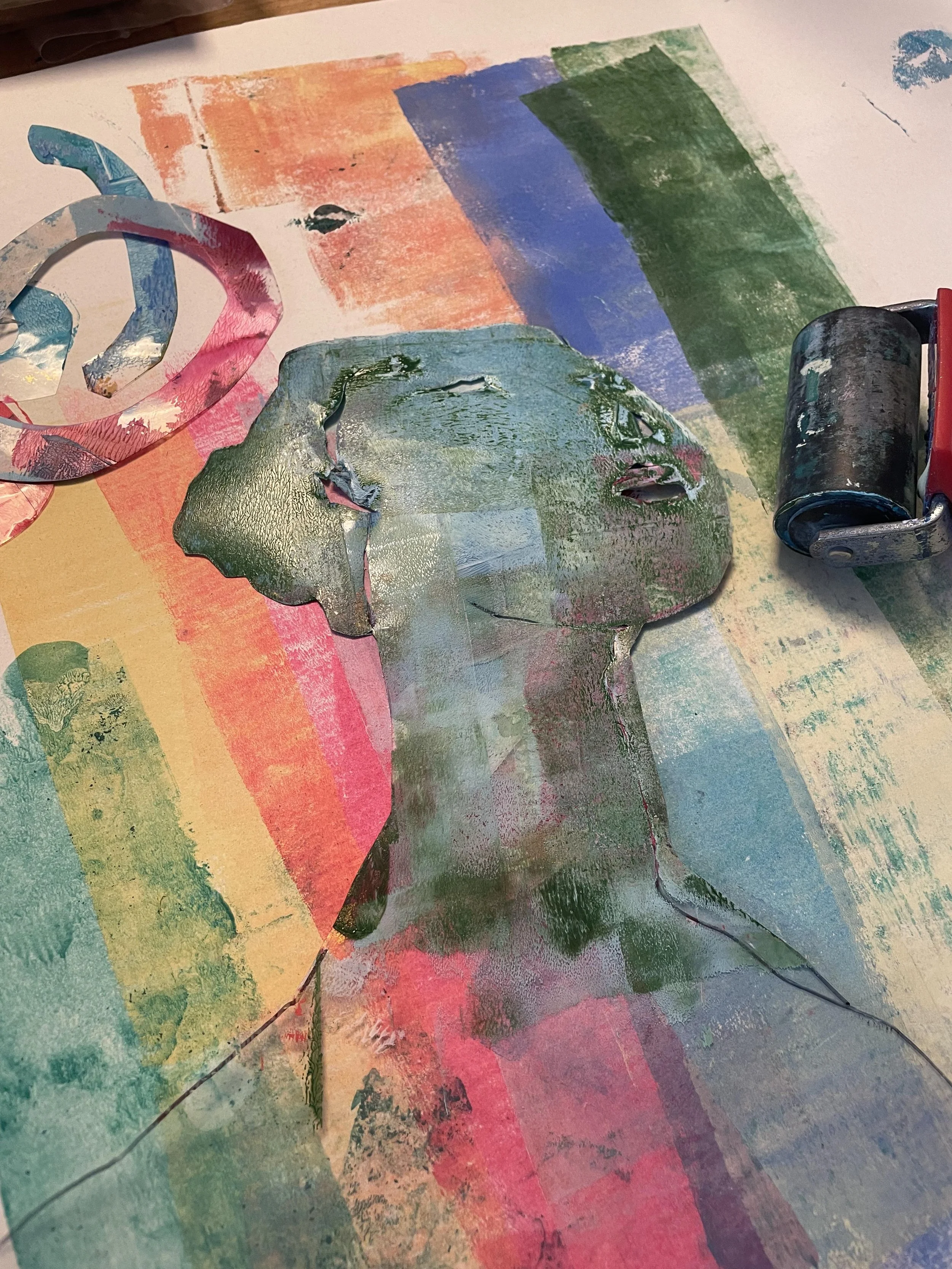
For many years my art practice has been influenced by the artist, psychiatrist and teacher Nancy Hillis and her approach to spontaneous beginnings in abstract art.

Her Six Maquette™ Exercise uses rapid, unedited marks and movements to help artists move beyond habitual choices.

I had used this kind of spontaneous mark-making in my own art for years.

But I hadn’t connected it with coaching

then making showed me something else…

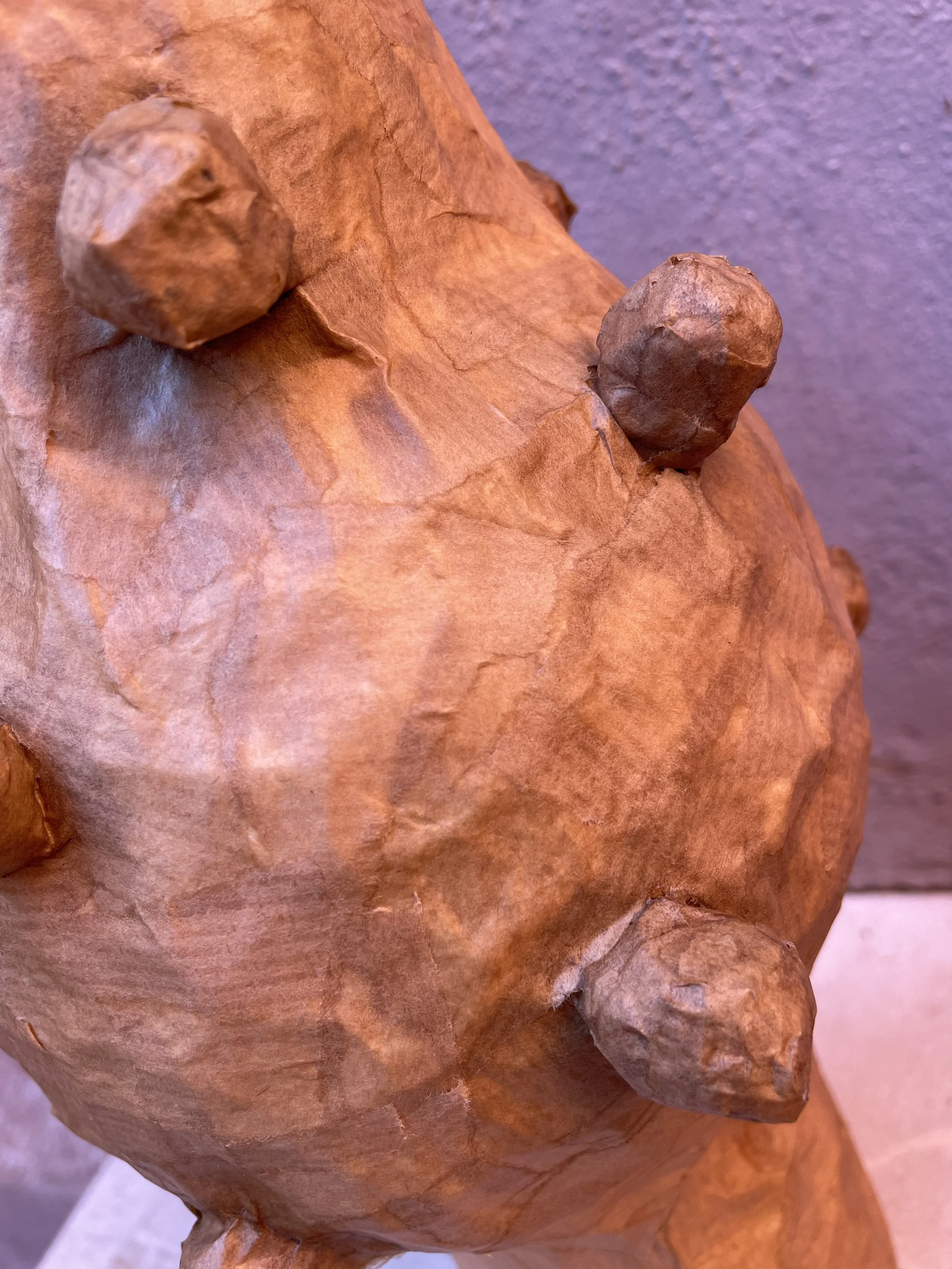
I had begun experimenting with papier-mâché as a possible coaching medium.

Working physically with paper and glue made me notice how much was happening alongside the thing I was actually making.

I could feel myself wanting to rush.

Wanting to get it right.

Wanting to make it stronger.

Wanting to improve something before I'd really looked at what was already there.

My hands were occupied, but my body and mind were constantly responding.

That interested me.

Could making something give us information that we might not reach by beginning with a conversation?

The trouble was that papier-mâché was hopelessly impractical. There were materials, glue, preparation, drying time and mess. Explaining how to make the thing risked becoming more important than the enquiry itself.

So I began stripping things away.

What was the simplest possible act of making?

A mark.

From making marks to noticing them

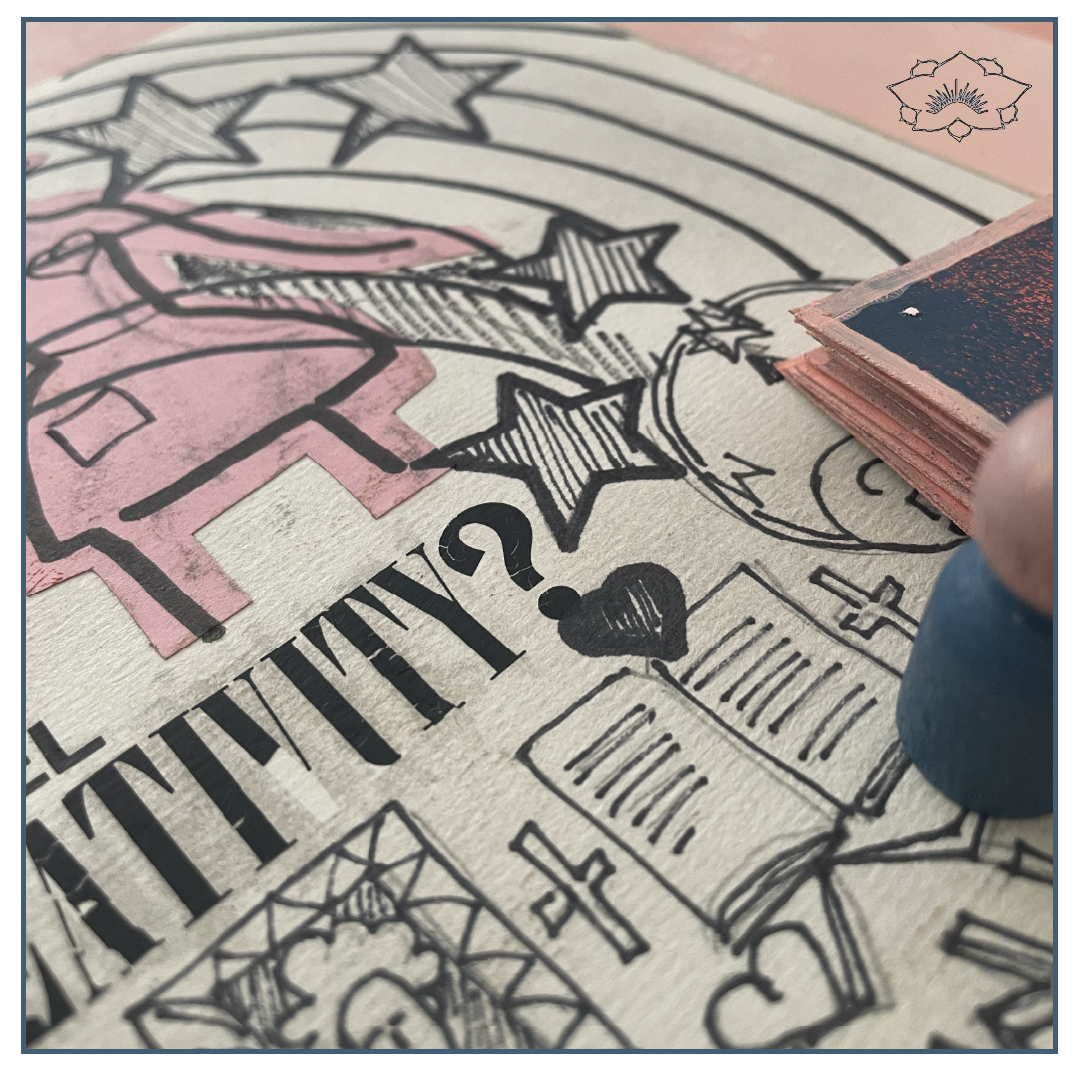
I began tearing larger sheets into fragments and placing them into small concertina books,

I noticed something unexpected.

The mark hadn't changed.

Its context had — and so had my response to it.

That felt immediately relevant to systemic coaching: changing our position, context or relationship to something can alter our experience of it without necessarily changing the thing itself.

So I returned to spontaneous mark-making, but with a different question.

Not:

What does this mark mean?

But:

What happens when I notice my response to it?

What catches my attention? What do I dismiss? What do I want to change?

What do I notice in my body?

What changes when I encounter the same thing differently?

And does any of that give me another way of looking at something beyond the page?

Those questions became the beginnings of Find Your Pattern.

A different place to begin

Find Your Pattern brings together things I had previously thought of as separate: my experience of making art, my systemic coaching practice, and my curiosity about how we notice and make meaning.

It does not assume that spontaneous marks reveal some hidden psychological truth.

I don’t interpret the marks — you do.

The marks simply give you something unfamiliar to respond to before the familiar explanation takes over.

YOU make the marks. YOU notice your response. YOU make the connections.

Conversation comes afterwards

What might happen when we remove the pressure of sharing a story you already know and begin with simple unexpected marks?

Journal Enthusiast

“This is the first time a coaching session has not just moved the needle on my understanding or emotions but actually affected my actions

The thinking behind the method has a simple foundation

Human experience is not purely verbal.

We make sense of the world through words, but also through what we see, feel, notice and do.

Embodied cognition explores the relationship between thinking, perception, action and the body.

In Find Your Pattern, the participant makes something before explaining it.

The hand moves.
A mark appears.
The eyes notice something.

Make → Notice → Respond → Reflect

The response is not treated as a hidden answer. It is simply another source of information worth noticing.

We make meaning from what we notice

Human beings naturally look for patterns, connections and meaning.

Abstract marks are useful because they do not arrive with one correct interpretation.

The interesting question is not:

What does this mark mean?

but:

What is drawing my attention?
What am I responding to?
Why might this matter to me now?

The participant provides the meaning. The marks simply give them something new to respond to.

Beginning somewhere other than the familiar story

Find Your Pattern begins before explanations.

People often arrive at coaching already carrying a well-developed story about their situation.

Sometimes that story is helpful.

Sometimes it also limits what can be noticed.

By starting with spontaneous marks rather than an explanation, Find Your Pattern temporarily interrupts that familiar narrative as they encounter something they have made but have not yet explained. This matters because it separates the act of making from the act of interpreting.

That creates space for curiosity.

Context changes what we see

A mark may feel one way as part of a larger drawing and quite different when it’s positioned somewhere else.

By cutting, turning and isolating parts of the paper, the process changes the context without changing the underlying material — creating a simple way to experience how perspective alters meaning.

The mark itself has not necessarily changed.

Its context has.

Something can remain the same while our experience of it changes because its context or relationship has changed.

Each step in Find Your Pattern has been deliberately designed around these principles — from making marks before meaning is assigned, to changing the context of what has been made and allowing interpretation to emerge afterwards. It creates the conditions for something familiar to be seen differently.

What can we discover when we make something before we know what it means — and then become genuinely curious about how we respond to it?